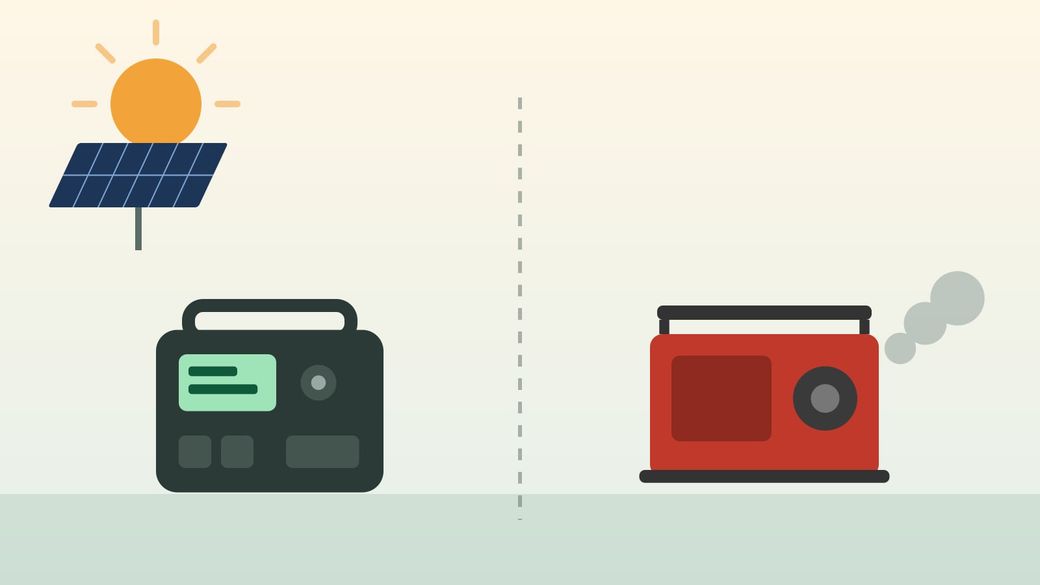
When the power goes out, most households reach for one of two portable options: a gasoline generator or a “solar generator”, which is really a large battery (a portable power station) that you can recharge with solar panels. They solve the same problem in very different ways.
Quick answer
A solar generator is silent, produces no fumes and is safe to use indoors, but it holds a fixed amount of energy (about 4.1 kWh for a large unit like the EcoFlow DELTA Pro 3) and refills slowly from the sun. A gas generator keeps running as long as you have fuel, but it is noisy, needs storage for gasoline and can kill: the CPSC says nearly 100[src] people die in the U.S. each year from carbon monoxide from portable generators. For essentials in short outages, a solar generator is the safer choice; for long outages with heavy loads, a properly used gas generator delivers more energy.
Key takeaways
- Solar generators: no fumes, silent, indoor-safe; limited stored energy.
- Gas generators: energy as long as you refuel; must run outdoors, far from the house.
- A small inverter generator like the Honda EU2200i produces about 5.8 kWh per tank at full rated load.
- CPSC: run gas generators outside only, at least 20 feet from the house.
- You can combine both: a battery for quiet nights and indoor use, a generator to recharge it in long outages.
More options are in our backup power guides.
How they compare
To keep the comparison concrete, we use two popular models: the EcoFlow DELTA Pro 3, a large portable power station, and the Honda EU2200i, a widely used inverter generator.
| EcoFlow DELTA Pro 3 (solar generator) | Honda EU2200i (gas generator) | |
|---|---|---|
| Energy | 4,096 Wh stored per full charge | About 5.8 kWh per tank at rated load; 3.6 kWh at 1/4 load |
| Output power | 4,000 W | 1,800 W rated, 2,200 W max |
| Refuel / recharge | Wall outlet, solar panels or a generator | 0.95 gallon tank of gasoline |
| Noise | Quiet fan noise | 48–57 dB(A) |
| Indoor use | Yes | No: outdoors, at least 20 feet from the house (CPSC) |
| Maintenance | Little; battery rated for 4,000 cycles to 80% | Oil changes, fresh fuel, periodic running |
| Price on the maker's site (Oct 2026) | $2,799 on sale (list $3,299) | $1,199 |
Energy: how long can each keep you going?
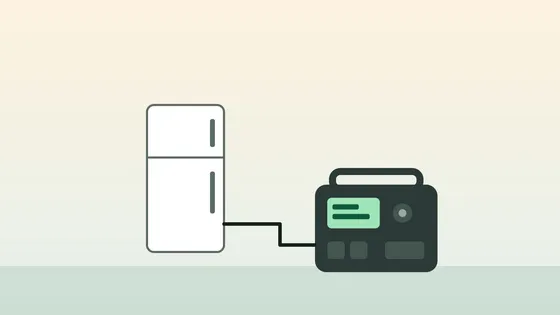
A solar generator is like a fuel tank you fill with electricity. The DELTA Pro 3 stores 4,096 Wh[src]. A typical refrigerator uses about 617 kWh/year[src] a year according to the EIA, or roughly 1.69 kWh a day, so a full charge could keep a fridge running for about 2.4 days on its own, before inverter losses.
A gas generator’s limit is fuel. The Honda EU2200i runs 3.2 hours per tank at full load and 8.1 hours at a quarter load, which works out to roughly 3.6 to 5.8 kWh per tank. Keep refilling and it keeps going, as long as gasoline is available. In a long regional outage, that is not guaranteed.
Power: what can each run at once?
Output power decides which appliances can run together. The DELTA Pro 3 is rated for 4,000 W, more than the Honda’s 1,800 W, so it can handle larger loads such as a microwave and a fridge together. Bigger gas generators exist, but they are louder and use more fuel.
Safety: the biggest difference
Gas generators produce carbon monoxide (CO), a colorless, odorless gas. The Consumer Product Safety Commission says an average of nearly 100 people die in the U.S. each year from CO poisoning caused by portable generators, and it advises running them outside only, at least 20 feet away from the house, never in a garage, basement or near open windows.
Batteries have their own, much smaller, risks: buy a certified unit, keep it away from heat and water, and follow the manufacturer’s instructions.
Which should you choose?
Solar generator (portable power station)
Pros
- No fumes: safe indoors
- Silent
- No fuel to store; recharges from solar or the wall
- Little maintenance
Cons
- Fixed stored energy
- Slow solar recharging, especially in bad weather
- Higher price for the energy it holds
Gas generator
Pros
- Runs as long as you can refuel
- Lower upfront cost for the power it delivers
- Can recharge a power station too
Cons
- Carbon monoxide risk; outdoors only
- Noise
- Needs fuel storage and maintenance
- Fuel can be scarce in long outages
Choose a solar generator if your outages are usually hours to a day or two, you mainly need to keep a fridge, lights, internet and devices running, you live in an apartment or a place where generators are impractical, or safety and quiet are priorities.
Choose a gas generator if you get multi-day outages, need to run heavy loads for long periods, and have a safe outdoor location and a plan to store fuel.
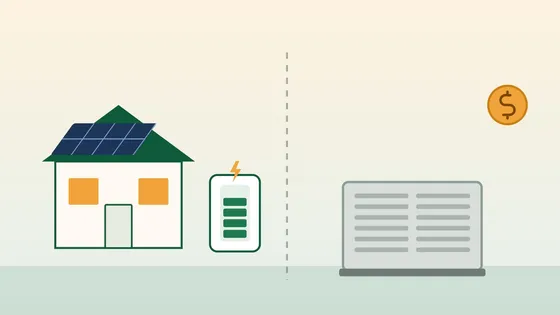
Some households combine both: a power station for indoor, overnight power, and a generator to recharge it during long outages. If you want automatic whole-home backup instead, compare a home battery with a standby generator. To size a battery for your needs, try the battery size calculator.