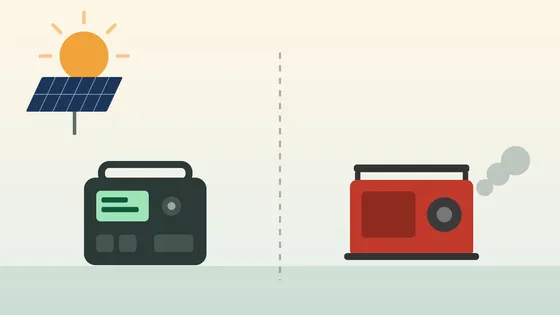
“Solar generator” is the marketing name for a portable power station: a large lithium battery with an inverter and outlets that you can recharge from the wall or from solar panels. For home backup, the questions that matter are how much energy it stores, how much power it can deliver at once, how long the battery lasts and what you pay for each watt-hour.
Quick answer
Based on manufacturer specifications, the EcoFlow DELTA Pro 3 stores the most energy here (4,096 Wh[src]) and has the best rated cycle life. The Jackery HomePower 3000 is the lowest cost per watt-hour of the large stations (about $0.44/Wh on sale). The Anker SOLIX F3800 Plus offers the highest output, but only with its expansion battery. For a fridge and devices through a short outage, the much smaller Jackery Explorer 1000 v2 costs a fraction of the price.
Key takeaways
- Most stored energy: EcoFlow DELTA Pro 3, 4,096 Wh, rated for 4,000 cycles to 80%.
- Lowest cost per Wh among large stations: Jackery HomePower 3000, about $0.44/Wh at its sale price.
- Anker SOLIX F3800 Plus: 6,000 W only with an expansion battery; 3,300 W as a single unit.
- Budget pick for short outages: Jackery Explorer 1000 v2, 1,070 Wh for $519.
- All four use LFP batteries and carry a 5-year warranty from the maker (Jackery when bought at jackery.com).
More options are in our backup power guides.
How we chose
We have not lab-tested these units. We compared models from three major brands using the specifications and prices published on each manufacturer’s U.S. website on October 24, 2026, and we judged them on five criteria that matter for home backup:
- Capacity (Wh): how long it can keep your essentials running.
- Continuous output (W): what you can run at the same time.
- Rated cycle life: how many full charges before capacity drops to the stated level.
- Weight: whether you can move it between rooms.
- Price per watt-hour: what each unit of stored energy costs.
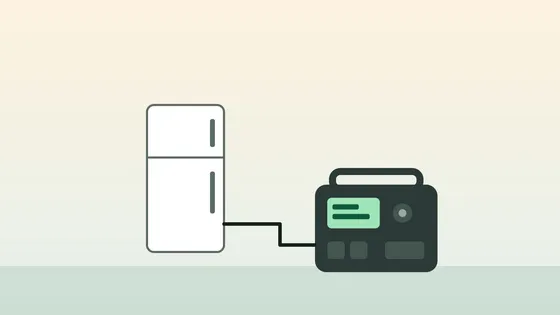
To make capacity concrete, we show how long each station could run an average U.S. main refrigerator, which uses about 617 kWh/year[src] a year according to the EIA, with a 15% margin for inverter losses (our assumption).
Comparison at a glance
| Model | Capacity | Continuous output | Rated cycles | Weight | Price on maker's site | Price per Wh |
|---|---|---|---|---|---|---|
| EcoFlow DELTA Pro 3 | 4,096 Wh | 4,000 W | 4,000 to 80% | 113.5 lb | $2,799 | $0.68 |
| Anker SOLIX F3800 Plus | 3,840 Wh | 6,000 W | 3,000+ (retention not stated) | 136.7 lb | $2,399.99 | $0.62 |
| Jackery HomePower 3000 | 3,072 Wh | 3,600 W | 4,000 to 70% | 59.5 lb | $1,349 | $0.44 |
| Jackery Explorer 1000 v2 | 1,070 Wh | 1,500 W | 4,000 to 70% | 23.8 lb | $519 | $0.49 |
| Model | Capacity | Average main fridge |
|---|---|---|
| EcoFlow DELTA Pro 3 | 4,096 Wh | About 2.1 days |
| Anker SOLIX F3800 Plus | 3,840 Wh | About 2 days |
| Jackery HomePower 3000 | 3,072 Wh | About 1.6 days |
| Jackery Explorer 1000 v2 | 1,070 Wh | About 13 hours |
The picks
Most stored energy: EcoFlow DELTA Pro 3
EcoFlow DELTA Pro 3
The largest single unit here, with the strongest cycle-life rating.
- Capacity
- 4,096 Wh
- AC output
- 4,000 W
- Rated cycles
- 4,000 cycles
- Weight
- 113.5 lb
- List price
- $3,299
The DELTA Pro 3 stores 4,096 Wh and delivers 4,000 W continuously, enough to run a fridge, a microwave and lights together. EcoFlow rates it for 4,000 cycles to 80% capacity, the best retention figure in this group. It is the most expensive per watt-hour of the large stations at about $0.68/Wh on sale, and at 113.5 lb it is meant to roll, not carry.
Pros
- Most capacity in one unit
- 4,000 W continuous output
- Rated for 4,000 cycles to 80%
Cons
- Highest price per Wh of the large stations
- Heavy: over 110 lb
Lowest cost per watt-hour: Jackery HomePower 3000
Jackery HomePower 3000
The cheapest stored energy among the large stations, and the lightest of them.
- Capacity
- 3,072 Wh
- AC output
- 3,600 W
- Rated cycles
- 4,000 cycles
- Weight
- 59.5 lb
- List price
- $1,499
The HomePower 3000 stores 3,072 Wh with 3,600 W continuous and 7,200 W surge output. At its sale price it works out to about $0.44 per watt-hour, and at 59.5 lb it is by far the lightest of the three large stations. Its cycle rating is to 70% capacity rather than 80%, and Jackery’s 5-year warranty applies when you buy from jackery.com.
Pros
- Lowest price per Wh of the large stations
- Lightest of the large stations
- 7,200 W surge for motor start-up
Cons
- Less capacity than the EcoFlow or Anker
- Cycle rating is to 70%, not 80%
- Full warranty only when bought direct
Most output with expansion: Anker SOLIX F3800 Plus
Anker SOLIX F3800 Plus
Large capacity and the highest headline output, but read the fine print on power.
- Capacity
- 3,840 Wh
- AC output
- 6,000 W
- Rated cycles
- 3,000 cycles
- Weight
- 136.7 lb
- List price
- $3,000
The F3800 Plus stores 3,840 Wh, close to the EcoFlow, for a lower sale price (about $0.62/Wh). Anker advertises 6,000 W of output, but its product page notes that this requires an expansion battery: a single unit delivers 3,300 W, which is still plenty for essentials. Anker lists 3,000+ cycles (without saying to what capacity), the lowest figure here, and at 136.7 lb it is the heaviest.
Pros
- Nearly as much capacity as the EcoFlow for less
- Highest output when paired with an expansion battery
Cons
- 3,300 W as a single unit
- Lowest rated cycle count here
- Heaviest of the group
Budget pick for short outages: Jackery Explorer 1000 v2
Jackery Explorer 1000 v2
Not a home backup system, but enough to keep a fridge and devices going through an evening outage.
- Capacity
- 1,070 Wh
- AC output
- 1,500 W
- Rated cycles
- 4,000 cycles
- Weight
- 23.8 lb
- List price
- $589
If your outages last hours rather than days, a smaller station may be all you need. The Explorer 1000 v2 stores 1,070 Wh and delivers 1,500 W continuous (3,000 W surge). That is about 13 hours of an average fridge, or a long time for a router, lights and phones. At 23.8 lb, it is easy to carry from room to room.
Pros
- Low price
- Light and portable
- LFP battery rated for 4,000 cycles to 70%
Cons
- Less than a day for a fridge
- Too small to back up more than essentials for long
What a solar generator can and can’t do
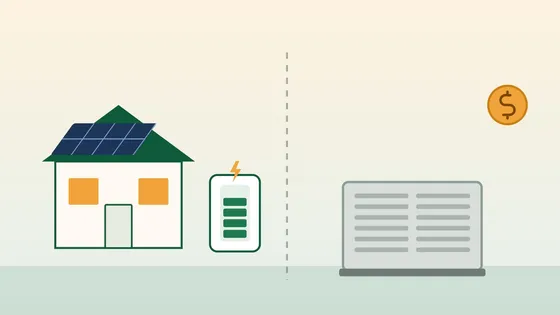
Even the largest stations here hold about 3 to 4 kWh. That covers a fridge, lights, internet, phones and a medical device for a day or two, but not central air, an electric range or an electric water heater for long. For automatic whole-home backup, a standby generator or several home batteries are the realistic options; a portable station is a simpler, cheaper way to protect your essentials.
Solar panels let you recharge during a multi-day outage, but output drops sharply in cloudy weather, so treat solar as a way to stretch your stored energy rather than a guarantee.
Bottom line
Pick by capacity first: about 2,000 Wh per day of essentials is a sensible starting point. Choose the EcoFlow DELTA Pro 3 for the most energy and cycle life, the Jackery HomePower 3000 for the cheapest stored energy in a large station, the Anker SOLIX F3800 Plus if you plan to expand for more output, and the Jackery Explorer 1000 v2 if you only need to ride out short outages. Prices change often, so check the manufacturer’s site before you buy.
To size a larger battery system for more of your home, use the battery size calculator.