Tesla Powerwall 3 and the Enphase IQ Battery 5P are two of the most-quoted home batteries on the U.S. market, and they are built on opposite ideas. Powerwall 3 is one large battery with a solar inverter built in; the IQ Battery 5P is a small module you stack, designed for Enphase microinverter systems. Which is better depends mostly on whether you are installing new solar or adding to an Enphase system you already have.
Quick answer
Powerwall 3 is the better value for most new solar-plus-battery installs: one unit stores 13.5 kWh (Tesla), delivers 11.5 kW (Tesla) continuously, includes a solar inverter and was quoted at about $967 per kWh in 2026. The IQ Battery 5P makes more sense if you already have Enphase microinverters, want to buy storage in 5 kWh steps or value its longer 15 years (Enphase) warranty, at a higher quoted price of about $1,429 per kWh.
Key takeaways
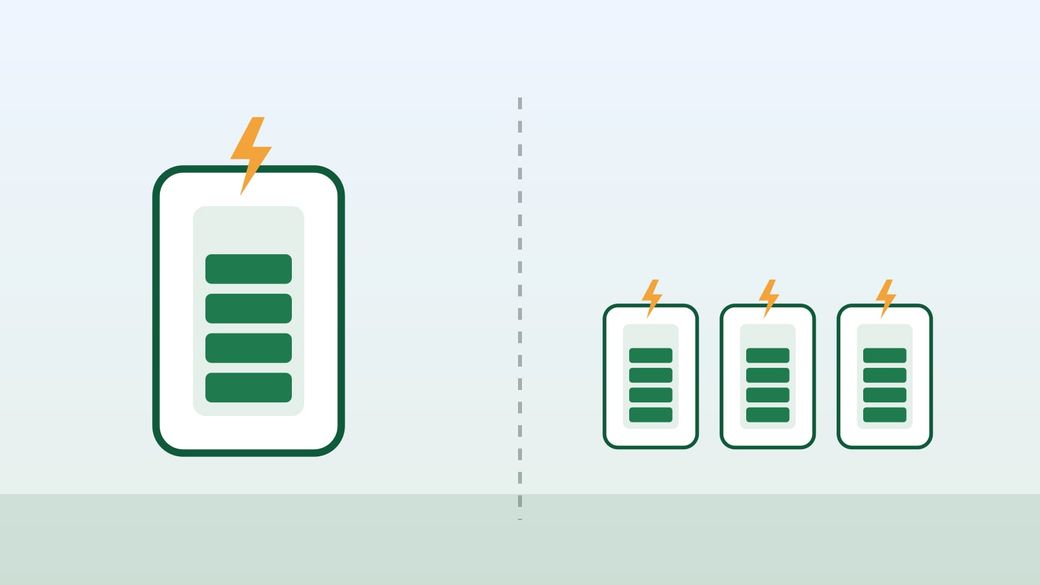
- Three IQ Battery 5P units match one Powerwall 3 in storage and power, but were quoted about $8,400 higher in 2026.
- Powerwall 3 includes a solar inverter for up to 20 kW of panels, which can save buying a separate one.
- The IQ Battery 5P is AC-coupled and fits naturally with existing Enphase microinverter systems.
- Enphase offers the longer warranty term; Tesla warrants more capacity at the end of it.
- Both can provide backup only with their backup hardware (Tesla Gateway or Backup Switch; Enphase IQ System Controller).
For more brand comparisons, see our reviews and comparisons.
Powerwall 3 vs Enphase 5P: specs side by side
| Tesla Powerwall 3 | Enphase IQ Battery 5P | |
|---|---|---|
| Usable energy | 13.5 kWh | 5 kWh |
| Continuous power | 11.5 kW | 3.84 kW |
| Surge / motor starting | 185 LRA load start | 7.68 kW for 3 s, 6.14 kW for 10 s |
| Built-in solar inverter | Yes, up to 20 kW of panels, 6 inputs | No (AC-coupled, 6 built-in battery microinverters) |
| Coupling | AC or DC | AC |
| Round-trip efficiency | 89% (solar to battery to home) | 90% (AC to battery to AC) |
| Warranty | 10 years, 70% capacity, unlimited cycles* | 15 years or 6,000 cycles, 60% capacity |
| Weight | 287 lb | — |
| Typical installed price (2026 quotes) | $13,055 | $7,145 |
The efficiency figures are measured differently, so they are not directly comparable: Tesla quotes solar to battery to home, which includes its built-in inverter, while Enphase quotes AC in to AC out.
Which is cheaper: Powerwall 3 or Enphase 5P?
Per kWh of storage, Powerwall 3 is cheaper in real quotes. EnergySage marketplace quotes in the first half of 2026 averaged about $967 per kWh for Tesla and $1,429 per kWh for Enphase, before incentives.
For the same capacity, that difference adds up:
| Setup | Storage | Continuous power | Approx. installed price |
|---|---|---|---|
| 1 × Powerwall 3 | 13.5 kWh | 11.5 kW | $13,055 |
| 3 × IQ Battery 5P | 15 kWh | 11.52 kW | $21,435 |
Two caveats. First, Tesla’s price advantage shrinks if you already own Enphase microinverters, because a Powerwall 3 would be AC-coupled to them and its built-in solar inverter would go unused. Second, smaller needs favor Enphase: if one or two 5 kWh modules cover your essential loads, you avoid paying for a full 13.5 kWh battery. Our home battery cost breakdown covers the other line items in a quote.
Which handles backup better?
For whole-home backup, Powerwall 3 has the edge per unit. Its 11.5 kW of continuous power and 185 (Tesla) load-start rating give it strong motor-starting ability; Tesla says a single unit can support the power needs of most homes. A single IQ Battery 5P provides 3.84 kW continuous, so heavy loads need several units working together.
How long either one runs your home depends on what you power. Our guide to how long a Powerwall runs a house works through typical loads, and the same math applies to Enphase capacity.
Which works better with solar?
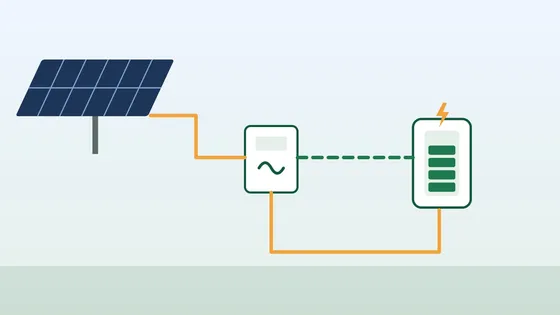
- New solar plus battery: Powerwall 3’s built-in inverter accepts up to 20 kW (Tesla) of panels on 6 inputs, so it replaces the solar inverter a new system would otherwise need. That simplifies the install.
- Existing Enphase system: the IQ Battery 5P is AC-coupled and part of the same Enphase system as IQ microinverters. It is the natural fit if your panels already have Enphase microinverters.
- Existing string-inverter system: both can be AC-coupled. Powerwall 3 supports up to 7.68 kW (Tesla) of existing AC-coupled solar per unit in its backup circuits. See AC-coupled vs DC-coupled batteries for the trade-offs.
Warranty and lifespan
Warranty terms compared
Pros
- Enphase: 15-year term, the longer of the two
- Tesla: 70% capacity guaranteed at 10 years, with unlimited cycles for normal home use
Cons
- Enphase: 6,000-cycle cap and 60% end-of-warranty capacity
- Tesla: the full term depends on keeping Powerwall connected to the internet for updates
For daily solar cycling, one cycle a day is about 365 a year, so Enphase’s cycle cap is unlikely to end the warranty before its year limit. Tesla’s warranty says that if Powerwall is not connected to the internet for an extended period, or is not registered, Tesla may not be able to honor the full warranty term; keep it online and check the current terms before you sign.
Powerwall 3 or Enphase 5P: which should you choose?
| Your situation | Better choice | Why |
|---|---|---|
| New solar and battery together | Powerwall 3 | Built-in solar inverter and the lowest quoted price per kWh |
| Whole-home backup with A/C or a well pump | Powerwall 3 | More power and motor-starting capability per unit |
| Existing Enphase microinverters | IQ Battery 5P | Same system and app; no unused inverter |
| Small backup need (a few circuits) | IQ Battery 5P | Buy storage in 5 kWh steps |
| You want the longest warranty term | IQ Battery 5P | 15 years vs 10 |
Before choosing a brand, work out how much storage you need: the battery size calculator shows how many units of each battery cover your daily use and peak load. Then get quotes for both from installers certified for each brand, and compare them per kWh with the same backup setup.