A home battery is one of the most expensive things you can add to a house, and quotes for the same equipment can differ by thousands of dollars. Here is what batteries actually cost in 2026, based on real installer quotes and installation data, and what changes the price.
Quick answer
A typical 13.5 kWh home battery system cost about $15,647[src] installed before incentives in the first half of 2026, according to EnergySage marketplace quotes. Across all brands, quotes averaged $1,130/kWh[src] of storage. The federal homeowner tax credit no longer applies to batteries placed in service after 2025, so any discount now comes from state or utility programs.
Key takeaways
- Budget roughly $1,130 per kWh of storage installed, before incentives.
- Price per kWh varies by brand: from about $967 to $1,429 in 2026 quotes.
- Electrical upgrades and backup equipment can add thousands; ask for a line-item quote.
- The 30% federal credit is gone for homeowner-owned systems placed in service after 2025.
- Some states and utilities still pay you to install or share a battery.
New to batteries? Start with our home battery guides.
How much does a home battery cost in 2026?
The best public view of real prices comes from two sources: EnergySage, a marketplace that publishes the quotes homeowners receive, and Lawrence Berkeley National Laboratory (Berkeley Lab), which collects installed prices from state agencies and utilities.
EnergySage reports that battery quotes averaged $1,130/kWh in the first half of 2026, and that a typical 13.5 kWh system cost $15,647 before incentives. Prices vary by brand:
| Brand | Price per kWh | Typical system size | Typical system price |
|---|---|---|---|
| Tesla | $967 | 13.5 kWh | $13,055 |
| FranklinWH | $1,232 | 15 kWh | $18,480 |
| Enphase | $1,429 | 10 kWh | $14,290 |
Berkeley Lab’s installation data points the same way from another angle. Among homeowners who paid cash, solar systems with a battery cost a median $2.10/W[src] more per watt of solar than systems without one. For the median 7.7 kW[src] residential system, that works out to roughly $16,200 for the battery and its equipment, close to the EnergySage figure. Most of Berkeley Lab’s battery data comes from California.
What you pay for in a battery quote
A quote is more than the battery. Expect these lines, and ask for each one to be listed separately:
- The battery itself, sized in kWh. More capacity costs more, but the price per kWh usually falls as you add units because labor and backup equipment are shared.
- Backup equipment: a gateway, backup switch or transfer switch that disconnects your home from the grid during an outage. Without it, many batteries cannot power your home in a blackout.
- Installation labor, mounting and wiring.
- Permits, inspection and utility interconnection.
- Electrical upgrades when needed: a new main panel, a sub-panel for backed-up circuits, or a service upgrade. These can swing the total the most.
How much battery will you pay for?
Price scales with capacity, so the cheapest battery is the one sized correctly for your goal. As a rough guide at the 2026 average of $1,130/kWh:
| Capacity | Typical use | Rough cost before incentives |
|---|---|---|
| 5 kWh | A few essential circuits for several hours | $5,700 |
| 13.5 kWh | Essentials for about two days, or a home for part of a day | $15,300 |
| 27 kWh | An average home for most of a day | $30,500 |
| 40 kWh | Whole home with high use, or multi-day essentials | $45,200 |
To find your size, use the battery size calculator. It shows how many units of each battery cover your daily use and peak load.
Incentives that still lower the price
The federal tax credit has ended for homeowners
Until 2025, homeowners could claim a 30%[src] federal tax credit on batteries. The IRS now states that the Residential Clean Energy Credit is not available for property placed in service after December 31, 2025, so our cost figures assume 0%[src] federal credit.
State and utility programs
Programs vary by state and change often, but some are large:
| Program | Where | What it pays |
|---|---|---|
| SGIP Residential Solar and Storage Equity | California (low-income customers) | $1,100/kWh |
| ConnectedSolutions | Massachusetts (Mass Save program, e.g. National Grid customers) | $275/kW |
- California’s SGIP pays eligible low-income customers up to $1,100/kWh of storage through its Residential Solar and Storage Equity budget, which can cover most of the cost of a battery. Funding and eligibility rules change, so check current availability on the program’s site.
- Massachusetts ConnectedSolutions pays $275/kW of average battery output during summer peak events (June 1 to September 30, 3 to 8 p.m., up to 60 events a summer). National Grid says customers have received about $1,200[src] a year on average, and the rate is locked for the first five summers.
For your own state, search the DSIRE database and ask your utility about battery or “virtual power plant” programs that pay you to share stored energy.
How to pay less for a home battery
Ways to cut the cost
Pros
- Get at least three quotes for the same capacity
- Back up essential circuits instead of the whole home
- Add the battery when you install solar to share labor and permits
- Enroll in a utility program that pays for battery use
Cons
- Undersizing to save money can leave you short in a long outage
- Whole-home backup with air conditioning needs more kWh and kW
- Panel upgrades are sometimes unavoidable
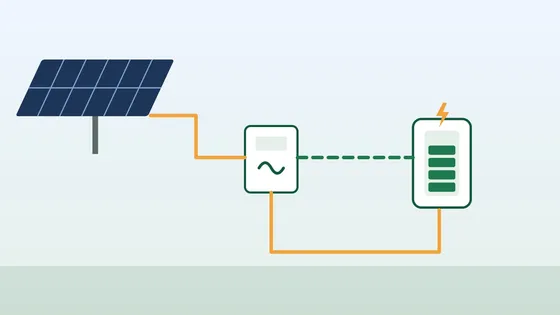
If you mainly want backup during outages, also compare a battery with a generator before you decide. And if you already have solar, ask installers whether your system can take an AC-coupled battery without replacing your inverter.
Want to see what a battery delivers for the money? Read how long a Powerwall runs a house during an outage.