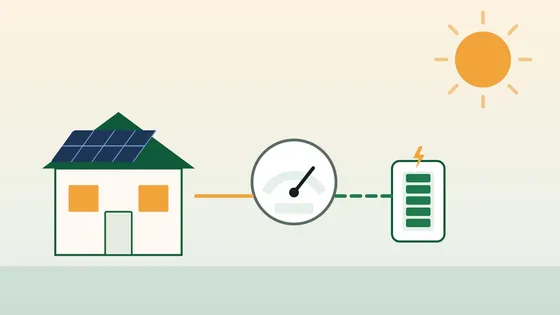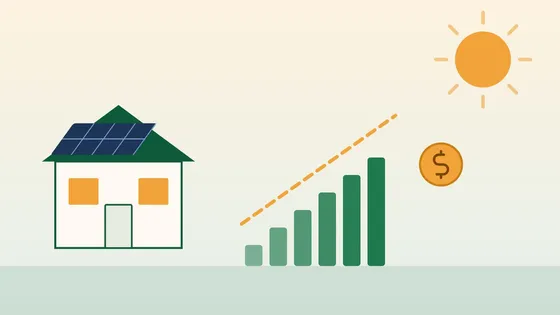
Rooftop solar in California is still worth it for many homeowners under NEM 3.0, but the way it pays has changed. Since April 15, 2023, new solar customers of PG&E, Southern California Edison and San Diego Gas & Electric are on the Net Billing Tariff, which credits exported electricity at its value to the grid instead of the full retail price. Solar now pays off by covering your own use, especially in the evening, not by selling power back.
Quick answer
Yes, in most cases, if the system is designed for NEM 3.0. California has some of the highest electricity prices in the country, an average of 32¢/kWh (EIA) for homes, so every solar kWh you use yourself saves a lot. Exports earn much less, though, so the best systems are sized to your own use and often include a battery to shift solar into the expensive evening hours. The CPUC projected payback of about 9 years (CPUC) or less for new customers when it adopted the tariff in 2022, before the federal tax credit for homeowner-owned systems ended.
Key takeaways
- NEM 3.0 (the Net Billing Tariff) applies to PG&E, SCE and SDG&E customers who applied to interconnect on or after April 15, 2023.
- Exported solar earns credits that change by hour and season, usually far below the retail price.
- Self-consumption is what saves money now: size the system to your use and shift use into sunny hours.
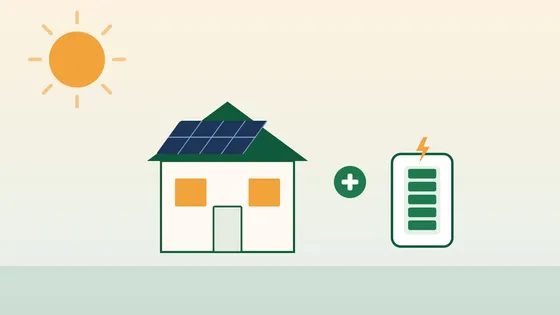
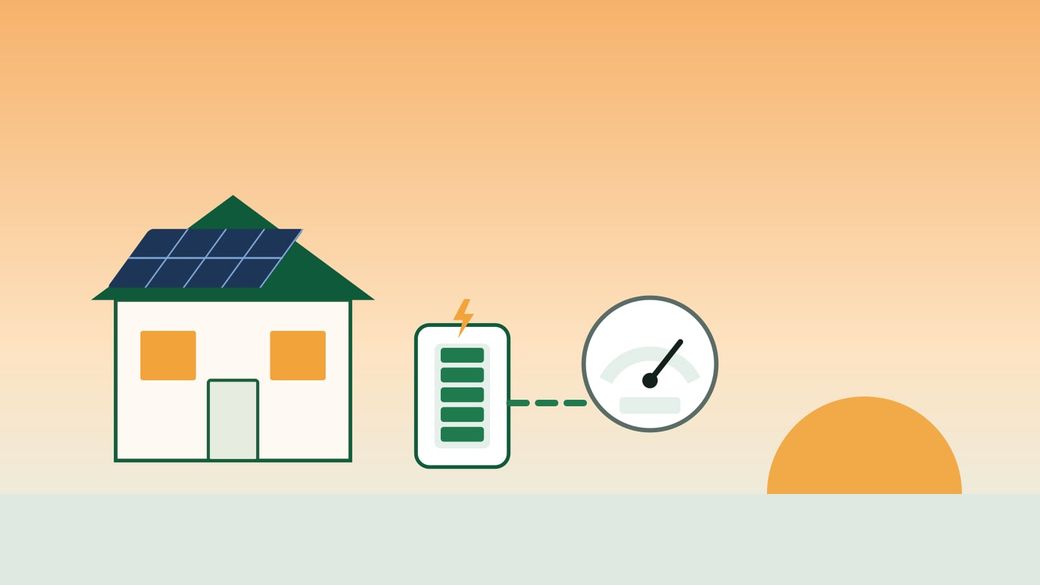
- Batteries let you use solar in the 4 to 9 p.m. peak, which is why they are now common on new California systems.
- Existing NEM 1.0 and 2.0 customers keep their terms for 20 years from interconnection.
For the basics on rates, sunshine and incentives, see our California solar data page and the solar by state hub.
What is NEM 3.0 in California?
“NEM 3.0” is the popular name for the Net Billing Tariff (NBT), which the California Public Utilities Commission (CPUC) adopted in Decision D.22-12-056 on December 15, 2022, to replace NEM 2.0. PG&E calls it the Solar Billing Plan. It applies to customers of the three investor-owned utilities who submitted an interconnection application on or after April 15, 2023.
How it works:
- Exports are credited at their value to the grid. The credit is based on the cost the utility avoids by not buying that electricity elsewhere, and it varies by time of day, day of the week and season. Midday exports, when the grid is full of solar, earn little; summer evening exports earn more.
- Your export values are set when the system gets permission to operate, according to PG&E.
- Residential customers must be on a time-of-use rate. PG&E automatically enrolls new solar customers in its Electric Home plan, where electricity is typically most expensive between 4 and 9 p.m.
- You still get a yearly true-up. Credits appear on a monthly statement and are settled once a year; PG&E says unused credits roll over to the next 12-month cycle.
NEM 2.0 vs NEM 3.0 in California: what changed?
| NEM 2.0 | NEM 3.0 (Net Billing Tariff) | |
|---|---|---|
| Who | Applied to interconnect before April 15, 2023 | Applied on or after April 15, 2023 |
| Export credit | Close to the retail rate | Value to the grid, varies by hour; usually far below retail |
| Rate plan | Time-of-use | Time-of-use (PG&E: Electric Home) |
| Best system design | Large enough to cover a year of use | Sized to self-consumption, often with a battery |
| How long it lasts | 20 years from interconnection | Export values set at permission to operate |
Under NEM 2.0, the grid worked almost like a free battery: you exported at midday and got nearly full credit to use at night. Under NEM 3.0, that trade is much less valuable, so a battery or daytime electricity use does the job instead.
Is solar still worth it in California in 2026?
For most homeowners who use a meaningful amount of electricity, yes. The key is that self-consumed solar is valuable: in our calculation, each kW of panels in Los Angeles makes about 1,692 kWh a year, worth about $541 a year at California’s average residential rate, if you use all of it yourself.
When the CPUC adopted the tariff, it projected average savings of about $100 (CPUC) a month for new solar customers and at least $136 a month for solar with a battery. Two things have changed since then:
- No federal credit for buyers. The federal tax credit for homeowner-owned systems ended for systems placed in service after December 31, 2025, so buying now costs more than when the CPUC made its projection. Leases and PPAs may still carry a business credit. Read whether solar is worth it without the tax credit.
- The tariff survived a court challenge. In March 2026, a state appeals court upheld the Net Billing Tariff after the California Supreme Court sent the case back for a second review, so homeowners should plan around NEM 3.0 rather than wait for NEM 2.0 terms to return.
Solar is a weaker deal if your use is low (California homes average only 503 kWh/month (EIA), about 6,036 kWh a year), if you are away during the day and have no battery, or if your roof is shaded.
Do you need a battery with NEM 3.0?
You don’t need one, but it is often the difference between a good and a mediocre system. A battery charges from midday solar that would otherwise earn a low export credit, then powers your home in the 4 to 9 p.m. peak, when time-of-use prices are highest. It also gives you backup during outages.
California homeowners have adapted: Berkeley Lab found that the share of new U.S. home solar systems with a battery rose from 25% (Berkeley Lab) in 2024 to 37% in 2025, driven largely by California, which has one of the highest battery attachment rates in the country.
The catch is cost: home batteries were quoted at about $1,130/kWh (EnergySage) of storage in 2026. Size the battery to your evening use, not to the biggest unit available. Our battery size calculator helps, and our guide to a home battery without net metering shows how to check the savings.
How to size solar for NEM 3.0
- Start from your bill, not your roof. Use 12 months of usage to size the system to what you use, not to the maximum number of panels that fit.
- Look at when you use power. Evening-heavy households benefit most from a battery; work-from-home households can use more solar directly.
- Plan for new loads. An EV or heat pump raises your use and can justify more panels.
- Shift what you can into sunny hours: laundry, dishwasher, pool pumps and EV charging.
- Ask installers to model NEM 3.0 export values, not retail credits, and to show savings with and without a battery.
California solar incentives in 2026
- SGIP battery rebates. The Self-Generation Incentive Program’s equity budget pays eligible low-income households up to $1,100/kWh (CPUC) of storage, but most residential budgets were closed or waitlisted when we checked in October 2026.
- Property tax exclusion. A qualifying solar system does not raise your assessed property value if it qualifies before January 1, 2027, under the State Board of Equalization’s rules.
- Your utility’s programs. Ask your utility whether it pays battery owners to share stored energy during grid emergencies.
Already on NEM 2.0? Keep it
If you went solar before April 15, 2023, you keep your NEM 1.0 or 2.0 terms for 20 years from interconnection. Adding a battery to an existing system is generally possible; ask your utility and installer how it affects your tariff before you change anything.