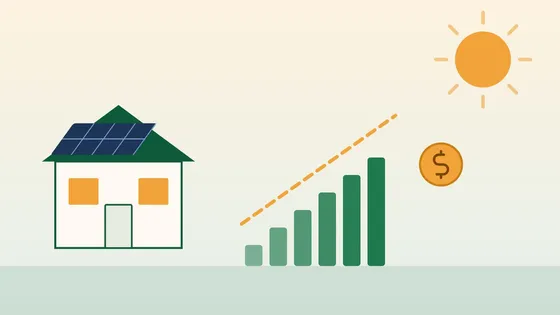
Net metering is a billing arrangement that credits you for the solar electricity your panels send to the grid, so you can use those credits when your panels are not producing. Whether your utility offers it, and at what rate, is one of the biggest factors in how much solar saves you, because most home systems export a large share of what they produce.
Quick answer
Net metering lets your electricity meter run both ways: when your solar panels make more power than your home uses, the extra goes to the grid and you get a bill credit, usually at the full retail price. Berkeley Lab found that typical home systems export 47% to 72% (Berkeley Lab) of their yearly output, so the rate you get for exports matters a lot. Many utilities are replacing net metering with net billing, which pays less for exports; in our Arizona example, that cuts first-year savings by about 32% to 50%.
Key takeaways
- Net metering credits exported solar at or near the retail rate; net billing pays a lower export rate.
- Typical home systems export 47% to 72% of their output, so the export rate can change savings a lot.
- Credits usually roll over month to month and settle at a yearly true-up; cash payouts are rare and low.
- Rules change often and vary by utility: confirm your tariff in writing before you sign.
- Without full net metering, using more solar at home or adding a battery raises the value of each kWh.
This guide is part of our incentives and financing guides.
How does net metering work?
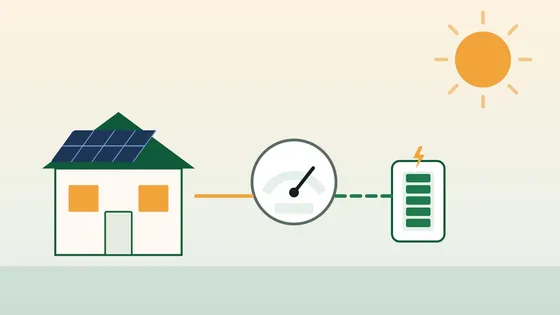
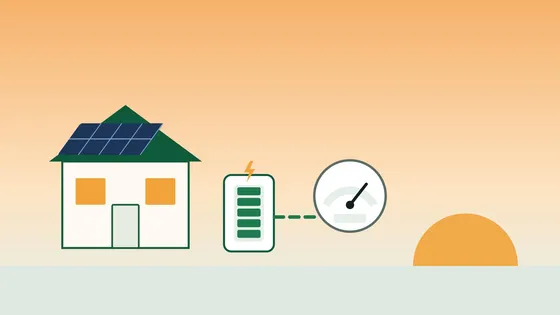
A solar home is still connected to the grid. During the day, the panels power your home first. When they produce more than you use, the surplus flows out to the grid. At night, or on cloudy days, you draw power from the grid as usual.
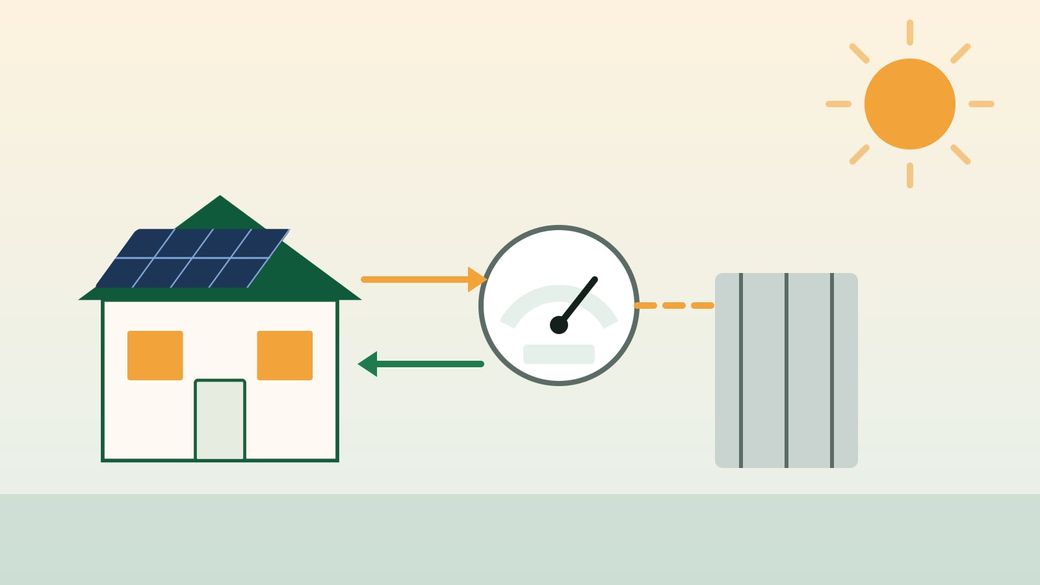
With net metering, a two-way meter records both flows, and your utility bills you only for the net amount:
- Each month, the kWh you exported are subtracted from the kWh you imported.
- If you exported more than you used, the extra becomes a credit that carries over to the next month.
- Once a year, at the true-up, leftover credits are settled. Depending on the rules, they expire, roll over or are paid out at a low rate.
The U.S. Department of Energy describes net metering as an arrangement in which solar owners are compensated for the power they export, and notes that eligibility depends on the policies of your state and utility.
Net metering vs net billing: what is the difference?
The key difference is the price you get for the electricity you export. Solar you use at the moment it is produced always saves you the full retail price, because you simply buy less from the utility.
| Net metering | Net billing | |
|---|---|---|
| Solar you use at home | Saves the retail price | Saves the retail price |
| Solar you export | Credited at or near the retail price | Credited at a lower export rate |
| Export rate example | Florida investor-owned utilities: retail-rate credits, leftover credits paid yearly at a low rate | Tucson Electric Power: 4.62¢/kWh (2026–2027) |
| Best way to save | Size the system to your yearly use | Use more solar at home, or add a battery |
Net billing goes by different names: California’s version is the Net Billing Tariff, often called “NEM 3.0”, and Arizona’s regulated utilities pay a Resource Comparison Proxy (RCP) export rate. Some utilities, such as Austin Energy, use a “value of solar” credit instead.
How much does net metering change your solar savings?
It depends on how much you export and how low the export rate is. Here is an example using real numbers from Arizona: the state’s average residential rate of 14.9¢/kWh (EIA), Tucson Electric Power’s export credit of 4.6¢/kWh (Tucson Electric Power), and a median-size 7.7 kW system in Phoenix producing about 13,500 kWh a year according to PVWatts.
| Scenario | Share exported | First-year savings | vs full net metering |
|---|---|---|---|
| Full net metering | Any | $2,010 | — |
| Net billing, low exporter | 47% | $1,360 | −32% |
| Net billing, high exporter | 72% | $1,010 | −50% |
The lesson is not that solar fails without net metering, but that the design matters. Under net billing, a household that uses solar during the day, shifts loads such as laundry or EV charging into sunny hours, or stores midday solar in a battery keeps more of the retail value. That also changes the solar panel payback period, which is shortest where exports are credited at retail.
Which states still have net metering?
It varies by state and often by utility, and it keeps changing. In the third quarter of 2026 alone, states took 221 (Solar Power World) distributed solar policy actions, and net metering was the most common topic, with 47 actions, according to the NC Clean Energy Technology Center’s 50 States of Solar report.
Here is how the four states we track handle it:
| State | Rule for new customers | What it means |
|---|---|---|
| Florida | Net metering (investor-owned utilities) | Exports credited at retail; leftover credits paid yearly at a low rate |
| California | Net billing (PG&E, SCE, SDG&E since April 15, 2023) | Exports earn credits that vary by hour, usually far below retail |
| Arizona | Net billing (APS, TEP); SRP has its own plans | Exports earn a yearly-set export rate, locked for up to 10 years |
| Texas | Varies by retail plan or utility | Choose a plan with a buyback rate; city utilities and co-ops set their own |
For other states, search the DSIRE database and read your utility’s current solar or “distributed generation” tariff. California’s rules are explained in our NEM 3.0 guide.
Is a battery worth it without net metering?
A battery raises the value of exports you would otherwise sell cheaply, by storing them for the evening. Whether that pays depends on the gap between your retail rate and your export rate, your time-of-use prices and the battery’s cost. Our guide to a home battery without net metering works through the numbers.
Questions to ask your utility before going solar
- Which tariff will I be on: net metering, net billing or a value-of-solar rate?
- What is the export credit per kWh, and does it change by hour or season?
- How long are my terms locked in after I connect?
- What happens to unused credits at the annual true-up?
- Which monthly fixed charges or minimum bills will I still pay?
- Will I have to switch to a time-of-use rate?
Then plug your rates into the solar savings calculator, which values solar at your retail rate, and adjust down for the share you expect to export.